
Last updated on October 17th, 2025 at 01:58 pm
TL;DR
- You can’t rank on ChatGPT like on Google Search. LLMs don’t use ranking systems.
- LLMs rely on static training data, not live crawling, if not for single prompts.
- Attribution is inconsistent; your content may be used without citation.
- Authority signals like backlinks or keywords don’t drive visibility for LLMs.
Probably the most important misunderstanding in the search marketing industry today is not whether we should respond to the rise of generative AI. Response is inevitable.
The real problem is that most teams are treating this shift as just another algorithm update, assuming these models behave like search engines. They don’t.
This reaction is rooted in discomfort; faced with a black box most don’t really understand, teams default to familiar tactics and clients stress agencies with impossible expectations.
Impossible in the most technical term, like “ranking” on LLMs.Agencies reach for what they already know, rebrand it as AEO, and hope that the old playbook still brings the same measurable results. But it doesn’t. If we want to influence how LLMs engage with our content, we have to start learning how the system actually works, thus accepting that it can only be partially and probabilistically influenced; not controlled.
Impossible in the most technical term, like “ranking on ChatGPT” or generally on LLMs.
Instead of ‘ranking,’ you’ll need to optimize your pages for the fragments models actually use (see how LLMs extract and quote snippets.)
Agencies reach for what they already know, rebrand it as AEO, close their eyes and hope that the old playbook still brings the same measurable results. But it doesn’t.
If we want to influence how LLMs engage with our content, we have to start learning how the system actually works, thus accepting that it can only be partially and probabilistically influenced; not controlled.
You can watch my podcast episode with Dinghy Studio, or keep reading for the full breakdown.


Enjoy Ad Free
Access the full Research Paper. For free.
This article is just an extract from the full 100 pages independent research I’ve written for Fuel LAB® Research over 2 years of analysis, studying LLMs models, and data collection.
Reason 1: LLMs don’t use a Ranking Algorithm like Search Engines do
Large Language Models like GPT-5 are trained using a process called pre-training, where the model processes hundreds of billions of tokens from massive datasets, including Common Crawl, Wikipedia, books, academic papers, and code repositories.
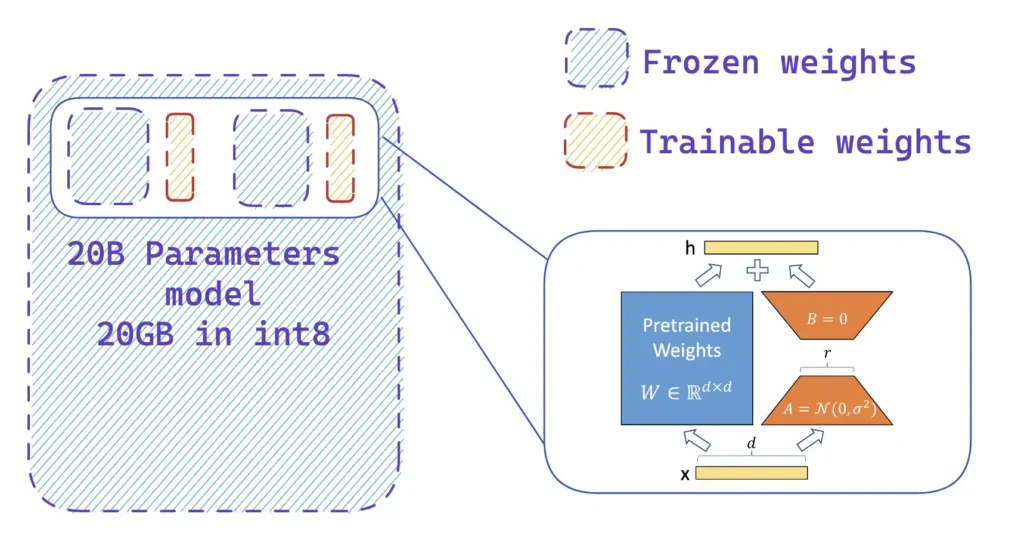
The model learns statistical patterns, not exact facts, and encodes them into billions of parameters (weights) inside its neural network.
I’ll explain exactly what this means in Chapter IV.
Once pre-training ends, the model’s weights are frozen. This means:
- You cannot inject new facts into the model after training.
- You cannot “submit your site” to be added to its knowledge base.
- You cannot ask for an update unless OpenAI & co retrains or fine-tunes the model with your content (which rarely happens, if not for the phenomenon of Synthetic Data).
While the core weights of models like GPT-5 remain frozen after pre-training (meaning you cannot inject new knowledge into their neural network without retraining), some new architectures use modular systems that allow parts of the model to be updated or extended via:
- Retrieval-Augmented Generation (RAG): dynamically fetching current information from search APIs or vector databases.
- Memory Modules (e.g., ChatGPT’s “custom GPTs” or persistent chat memory): storing user-specific preferences or facts outside the model weights.
- Tool Use and Plug-ins: calling APIs or calculators to fetch real-time information, not generated from internal knowledge.
This could lead to think something has changed, however, none of these mechanisms alter the model’s internal knowledge base (the billions of statistical weights learned during training).
RAG and Memory Modules only influences that one user’s specific experience, and won’t persist outside of that chat session. That core knowledge is still static.
Even when models appear “updated” (as with GPT5 or Claude 4) the model will not know about it, unless it’s accessed via a live retrieval mechanism. Even then, it’s not guaranteed to cite you.
✓ The model can “look up” new facts via tools or retrieval.
✖ The model cannot “learn” new facts in the traditional way unless it is retrained or fine-tuned.
Reason 2: Training Data isn’t a live index of the web
Unlike search engines, LLMs, even as of August 2025 with the release of GPT-5 and Gemini 2.5 Pro:
- Don’t systematically use a crawler that updates constantly.
- Don’t respond to sitemap.xml or Search Consoles submissions.
- Don’t use page freshness as a visibility signal.
- Don’t store full documents, but statistical abstractions.
This means there is no equivalent to SEO submission protocols like:
- Indexing APIs
- URL inspection tools
- Backlink tracking
- … and more
However, it is important to note that as of August 2025 OpenAI’s GPTBot and ClaudeBot by Anthropic do crawl the web on an ongoing basis.
While these crawls are not tied to live model updates, they might feed future snapshots of the model, or more likely support faster retrieval-augmented systems like ChatGPT-5 and similar releases.
In other words, your content will not be seen by the model unless it was:
- Present in the training dataset (which is closed and static), or
- Retrieved via search during a user interaction with RAG (and so in truth only for that chat session)
Even in those cases, being seen does not guarantee being cited.
Citation remains a probabilistic and extractability-dependent behavior.
Reason 3: LLMs are not Search Engines. They are Generators.
As introduced, it’s tempting to think that platforms like ChatGPT, Claude, or Google SGE / AIO / AIM work like search engines. But they don’t.
They are Large Language Models (LLMs) → statistical generators, not retrieval engines.
LLMs do not evaluate, rank, or index documents like search engines do. They generate responses based on either:
- Pre-trained internal knowledge, or
- On-the-fly retrieval of external text, used to guide or ground the generation.
This second approach, known as retrieval-augmented generation (RAG), is what powers systems like:
| Platform | Core Model | Retrieval Behavior | Citation Behavior |
|---|---|---|---|
| ChatGPT (GPT‑5) | Deep Research (autonomous web reports) & Agent Mode (multi-step tool execution) | Links shown in research reports and agent interactions | Cites sources in Deep Research outcomes; Agent Mode shows process steps and reference context |
| Microsoft (Copilot Suite) | GPT-5 integrated with real-time router across M365, GitHub, VS Code | Includes links in structured outputs | Citations are clear when referencing external content; integrated across apps |
| Google Gemini (1.5 Pro / 2.x) | Google search index + ecosystem tools | Selective linking | Snippet-based answers; links more prominent when using tools |
| Perplexity.ai | Live crawling + custom index | Frequently includes URLs | Strong inline citations with multiple sources visible |
| Claude (Anthropic) | Optionally live web search for paid users | Links when context provided | Generates citations only under explicit source context |
| xAI Grok 4 | Real-time web and X/Twitter search | Contextual storytelling | Informal, narrative citation style—less formal sourcing |
So if you don’t rank on chatGPT, what’s actually happening?
Most of these systems don’t “rank” documents the way Google Search does. Instead, they:
- Rewrite the user’s query into internal sub-questions or semantic fragments
- Retrieve supporting content, often in the form of titles, snippets, and intros
- Compose an answer, selecting and synthesizing fragments based on internal scoring: fluency, clarity, and helpfulness; not traditional authority.
Even when citations are shown, they are:
- Not guaranteed to have a link
- Not complete or reliable
- Not always attributed
In other words: your site might be quoted, paraphrased, or ignored and you won’t know unless you test the prompt yourself.
And the core issue remains: LLMs don’t understand what they’re saying
Whether pre-trained or grounded in live search, LLMs do not reason or verify. They don’t actually “understand” or “know” facts. LLMs complete patterns.
Their answers are fluent approximations, not factual commitments, and that’s true across:
- ChatGPT (OpenAI)
- Claude (Anthropic)
- Gemini (Google)
- Perplexity (independent)
- Bing Copilot (Microsoft)
Some simulate reasoning better than others. Actually, from experience, I would say depending on your luck with one specific chat session, one might simulate reasoning better, and another could collapse, resulting in an infuriating behavior. But none of them retrieve or cite in the way marketers are used to from traditional search engines.
Picture credit: Harsh Gupta, Medium, Revolutionize Fine-Tuning: Reduce Training Time and Memory Usage with LoRA
Reason 4: your web or app property isn’t “In ChatGPT”unless it was in the Training Set or Search Results
As we are introducing the concept that citations are not guaranteed or reliable, one would want to be “present” in the internal knowledge of the model. A critical realization for any digital team: you are invisible to LLMs by default.
Your content exists only if it was present in the open training corpus (e.g., in Common Crawl, Wikipedia, maybe Synthetic Data in future releases). These LLMs simply cannot “remember” you unless you were in the data it was trained on.
Differently, your content could be used on the fly and for a single user experience, if:
- It is discoverable through a live search engine API (Bing Search, Google Programmable Search, Perplexity’s crawler, Claude’s web lookup)
- It is structured in a way that is machine-readable and extractable in real time
- You are a commonly cited source in public datasets (e.g., Stack Overflow, Reddit, academic databases)
Even in browsing mode, visibility depends on how search engines index and display your content, not on LLM awareness.
With this, I am starting to introduce the point for SEO and Organic Search Engineering. SEO is not dead, as usual. It’s even more important than we could fathom years ago, and it’s going to stay crucial for every search API call in the future.
Enjoy Ad Free
Access the full Research Paper. For free.
This article is just an extract from the full 100 pages independent research I’ve written for Fuel LAB® Research over 2 years of analysis, studying LLMs models, and data collection.
In Summary:
- You cannot force inclusion into ChatGPT’s knowledge.
- You cannot update the model manually.
- You cannot push fresh content (unless it’s linked or included in a source ChatGPT can retrieve in browsing mode).
- You cannot learn what the model “knows”; only test what it says
- Optimization must shift from “ranking” to “being found , understood and chosen.”
It’s necessary to stop thinking in terms of “tricking the model” and start thinking in terms of clarity, availability, and machine readability, all of which we’ll explore in the next chapters.
FAQs
-
Can I make my website rank inside ChatGPT like on Google?
No. ChatGPT and other LLMs don’t use ranking systems like Google. Instead, they generate answers based on probabilities learned during training or retrieval. You can, however, increase visibility by structuring content so it is more likely to be included and cited.
-
How is ChatGPT’s training data different from Google’s index?
Google constantly crawls and updates live web pages. LLMs like ChatGPT are trained on static snapshots plus curated datasets. Unless retrieval systems (RAG) are used, updates to your website won’t be reflected in the model until the next training cycle.
-
Why doesn’t ChatGPT always cite my website when it uses my content?
Attribution in LLMs is inconsistent. Sometimes sources are cited, sometimes not. This depends on the model provider’s interface, the dataset, and the prompt. Structured blocks, FAQs, and authoritative definitions increase your chance of being cited.
-
Does link-building or keyword optimization help with AI visibility?
Traditional SEO tactics like backlinks or keyword density do not influence LLMs directly. Instead, focus on semantic clarity, schema markup, and extractable content structures.
-
How can I improve my chances of being mentioned by LLMs?
Download the full Research Paper, study and understand how generative models work, and build your framework based on facts, not on easy copy-paste solutions. Or, get in touch with us and get the blueprint we’ve created.

Pietro Mingotti is an Italian neural science researcher, entrepreneur and technical marketing specialist, best known as the founder and owner of Fuel LAB®, a leading digital marketing and technical marketing agency based in Italy, operating worldwide. With a passion for science, creativity, innovation, and technology, Pietro has established himself as a thought leader in the field of technical marketing and data science and has helped numerous companies achieve their goals.